

Early cancer detection is one of the most powerful levers we have to improve patient outcomes. In breast cancer, the difference is striking: when detected at a localized stage, the 5‑year survival rate reaches 99%. As data scientists, we stand at a pivotal moment where statistical modeling, machine learning, and clinical insight converge to make early detection more accessible, more accurate, and more humane.
This blog entry introduces my first applied project in biomedical machine learning: Breast Cancer Predictor Model and Virtual Assistant for Oncologists (OVA), a system designed to support oncologists with predictive analytics and patient‑centered communication.
Why Breast Cancer Prediction Matters
Breast cancer remains one of the most prevalent cancers worldwide, with 2.3 million new cases diagnosed in 2020. Its risk profile is shaped by multiple factors: age, genetics, lifestyle, hormonal influences, making it a complex disease that benefits from data‑driven interpretation.
Machine learning offers a unique advantage: it can detect subtle, nonlinear patterns in clinical data that may escape traditional diagnostic methods.
This project explores how predictive modeling can complement clinical expertise, not replace it, enhancing decision‑making and strengthening early detection strategies.
The Dataset: A Landmark in Computational Oncology
The foundation of this project is the Wisconsin Breast Cancer Dataset, donated in 1992 by the University of Wisconsin–Madison. It originated from a collaboration between:
- Dr. William H. Wolberg, Surgery & Human Oncology
- Prof. Olvi L. Mangasarian, Computer Sciences
- Graduate researchers Rudy Setiono and Kristin Bennett
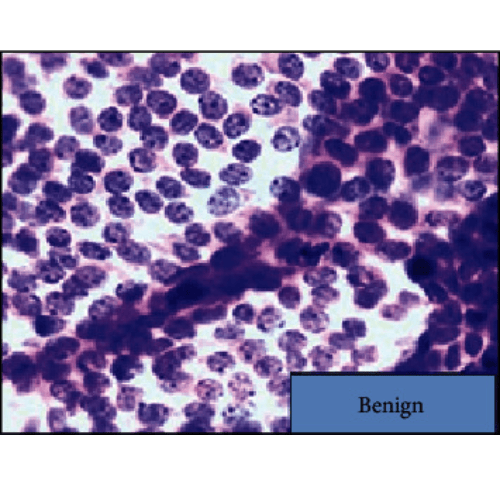
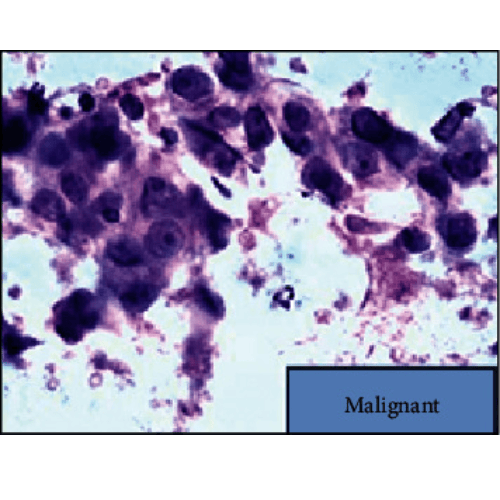
Their goal was ambitious: diagnose breast masses using only Fine Needle Aspiration (FNA) samples, relying on nine visually assessed cellular features.
Their classifier achieved 97% accuracy, a milestone in early computational oncology!
The dataset itself is historically rich, reflecting chronological clinical groupings from 1989 to 1991, totaling 699 samples. It has been carefully curated over time, with revisions that highlight the rigor behind its construction.
For a first biomedical ML project, this dataset is ideal: interpretable, clinically meaningful, and deeply connected to real diagnostic practice.
Building the Predictive Model
My model focuses on distinguishing benign from malignant tumors using statistical features derived from FNA samples.
Modeling Approach
- Logistic Regression for interpretability
- Support Vector Classifier (SVC) for robust boundary detection
- GridSearchCV for hyperparameter tuning
- Cross‑validation to ensure generalization
- Feature engineering to enhance predictive power
The result is a model that performs reliably across folds and offers clear insights into which cellular characteristics carry the strongest diagnostic weight.
This is not just a classifier, it is a bridge between raw clinical data and actionable medical insight.
Integrating Intelligence: The OVA Virtual Assistant
To complement the predictive model, I developed OVA, a lightweight virtual assistant designed for oncologists and patients.
What OVA Does
- Provides real‑time prediction outputs
- Delivers personalized health recommendations
- Helps oncologists communicate complex results clearly
- Offers lifestyle guidance, preventive measures, and treatment considerations
- Maintains consistency across environments thanks to prompt‑based architecture
OVA is intentionally simple to update, easy to deploy, and adaptable to new data. Its purpose is not automation for automation’s sake, but communication, clarity, and patient empowerment.
Technical Highlights
- Feature Engineering: Selection of high‑signal variables from FNA samples
- Cross‑Validation: Ensures reliability on unseen data
- Health Recommendations: Tailored advice based on prediction outcomes
- Model Visualization: Graphical insights into feature importance and prediction behavior
Together, these components form a system that supports oncologists with both analytical precision and communicative clarity.
Why This Project Matters
This project is more than a technical exercise. It represents a step toward:
- more accessible early detection
- more informed clinical decision‑making
- more personalized patient care
- more humane healthcare systems
Machine learning is not replacing clinicians. It is amplifying their ability to see patterns, anticipate risks, and guide patients with confidence.
This is the future of modern healthcare: data‑driven, patient‑centered, and deeply collaborative.
As a data scientist entering the biomedical domain, this project marks the beginning of a journey where statistical rigor meets human impact.
Early cancer detection is not just a technical challenge, it is a moral one. Every improvement in prediction, every refinement in communication, every insight extracted from data has the potential to change a life.
And that is the kind of work worth doing.
OVA Interactive Diagnostic Tool
Adjust cell nucleus features below to test the trained machine learning pipeline in real time:
OVA Conversational Assistant
Engage with our patient guidance chatbot to ask questions about cell parameters and general health recommendations:

 Data Scientist